

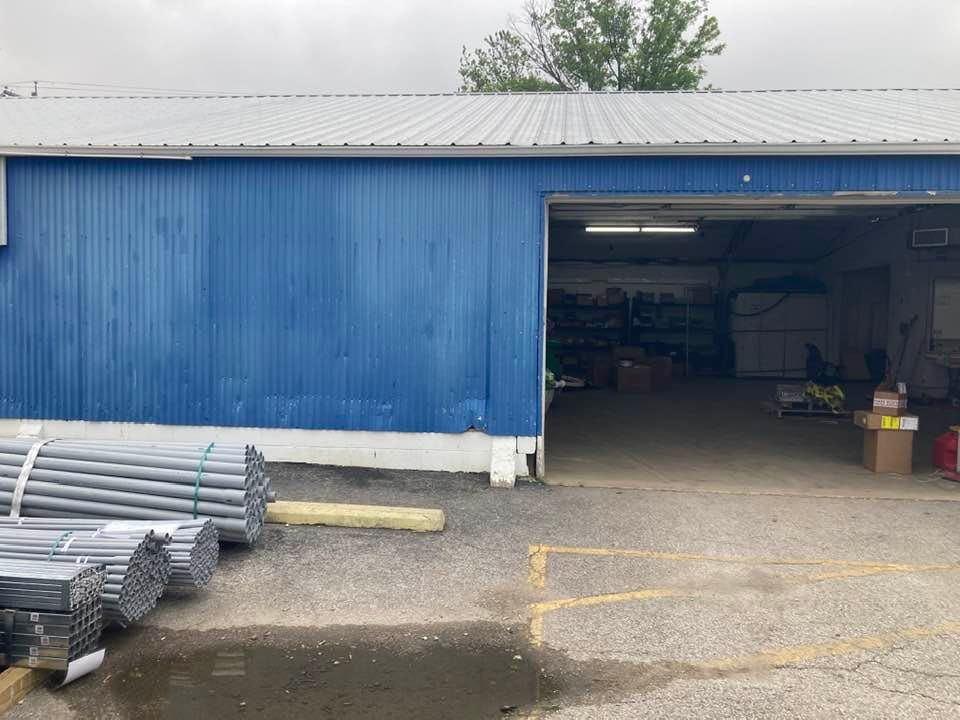
During a recent weekend I drove beyond my usual 20-minute radius, past farm country to a highly industrial area in rural Illinois, only to end up at a holding shed for miles of cable, washers and wiring and the laborers who climb towers to sync up powerful electronic systems. This was not a hotel conference room at the local Best Western. This was a warehouse/workhouse where I was hired to teach these guys whose job it is to weather many-a-storm, how to pump someone’s chest and resuscitate. I have to say, knowing these guys could be yards away when emergency vehicles can’t be found for miles means someone who may not have received a second look from passersby may be just the one who steps in to save a life.
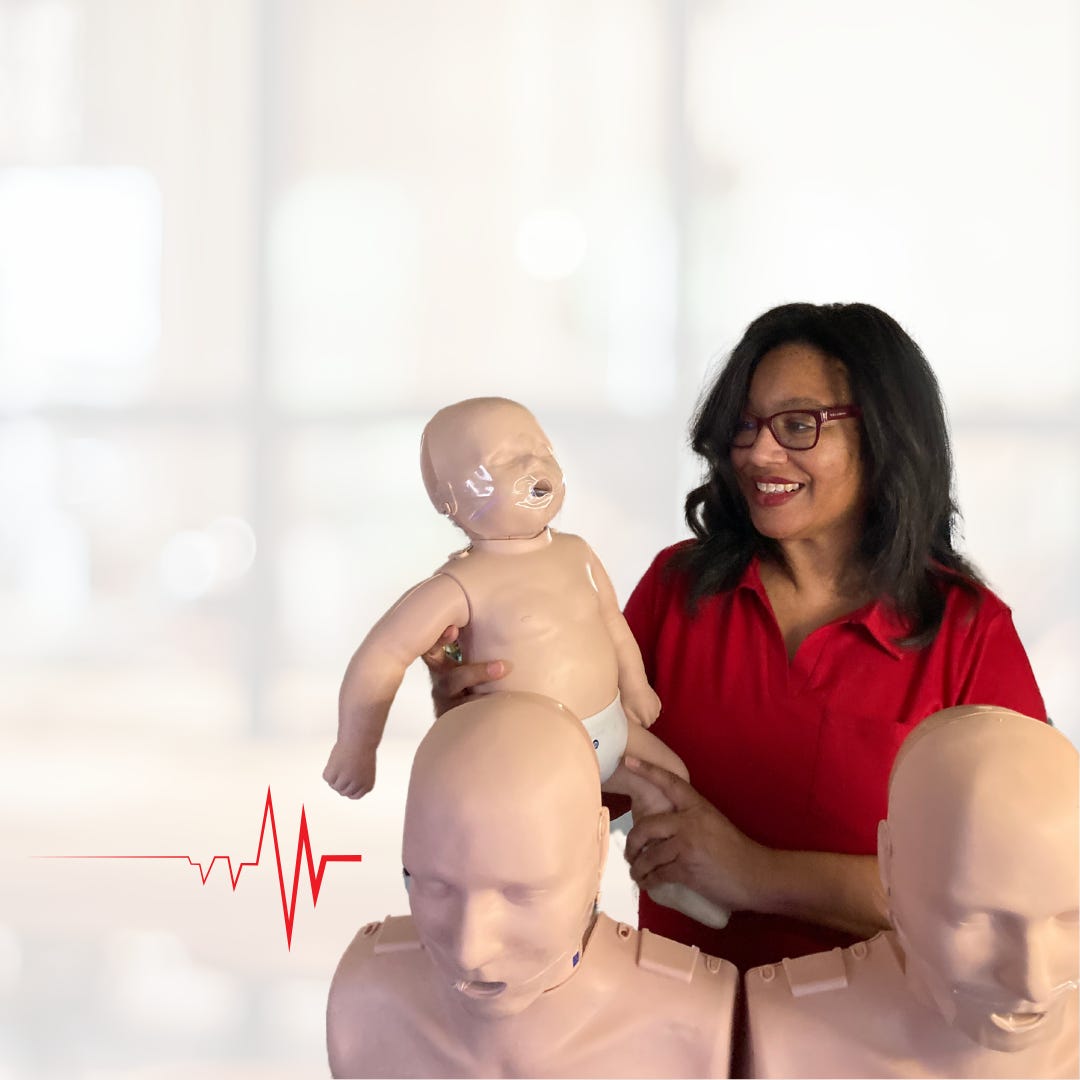
I’ve seen this scenario many times on television. I’ve even edited multiple video packages about it. Recently, though, I’ve ventured out of overnight editing rooms and long office hours running a PR newsroom to enter workplaces and spaces with manikins in tow, face masks and mock limbs to demo life threatening breathing scenarios and first responder skills in times of cardiac arrest.
Until I got out there after my instructor training, I was just looking for a cool weekend gig that was something different. Very quickly, it hit me. When teaching CPR, I get to meet potential real life heroes during their initiation phase. And with each class of students that made an inanimate chest inflate and deflate, there’s an inexplicable “high” that never grows old.
How did this all begin?
Upon entering the year 2025 I knew something had to change. Thirty plus years in television news editing rooms, 25 years as an indie filmmaker with writing being a foundational element of my being, a decade of teaching in higher ed and now serving as a communications director—when living an entire career where others presume you’re fulfilling your purpose, sometimes circumstance deems otherwise.
Most of my background meant being a part of a team that quickly gathers essential elements, storifies all available media and documentation, and distributes information through various channels widely to educate, inform and, in a number of scenarios, entertain. I enjoy information. Sharing information to the point where the receiver “gets it” and deploys that knowledge to their benefit is a thrill the news nerd in me cannot fully explain.
Education is liberating. But recently I had been missing that one-on-one exchange I often experienced in the form of community contact that had been necessary fuel for my existence.
I made a decision a few years ago to relocate from formative years in both Los Angeles and New York City to my Midwestern home. And when I was beckoned by one too many to answer the question, “What’s next?” I had to draw a card that normally I would readily present to others who wanted an “in” to the media world: “If you focus on broadcasting material in health or sports, you’re always working.”
In my mind, covering these two industries would lead to endless possibilities as a storyteller, and fill a gap where information seekers and stadium-sized fanbases await. Add to that, we are living in a time where distance and isolation breeds misinformation and prejudice, and community contact is under threat. It’s unhealthy. We actually need to boost our relationship to the health industry, active lifestyles and sports in order to beat the odds when so many social services we grew accustomed to are now under threat. Time to jump in and try something new.
Response time for trained emergency responders operating on minimal resources can range from an ideal four to seven minutes (or less) to double that amount of time in rural areas. In a study conducted within the last 10 years, one in 10 of those calls in rural areas recorded a 30-minute arrival time for emergency medical personnel. The pros are on their way. But in those critical moments, it’s “go” time.
That’s our reality. It’s not a situation any of us choose to be in, of course. But if we love our loved ones, have a fondness for a beating heart and healthy breathing and a desire to do something useful with that song stuck in our heads that mimics 120 beats per minute—the same pace as the ideal delivery of chest compressions—then we are onto something.
For me to make a career move as a CPR instructor, I thought why not be the person who knows what to do in an emergency and get others to join me? Surprisingly, the road to certification was as smooth as a resurfaced side street. Maybe some of what I’m sharing here will help pave the way for more of you to get on the instructor team as well.
Here is my list that defines my “why” when becoming a certified American Red Cross instructor:
Need. According to the American Red Cross (ARC), through which I received my instructor certification, survival chances decrease by 10% for every minute that immediate CPR and use of an AED is delayed. They estimate that immediate CPR can triple the chance of survival.
Growing field. ARC states that four out of every 10 adults have completed, or are interested in taking, a lifesaving course. Among those with prior training experience, seven out of 10 want to refresh their skills. Certifications for these first responders have to be renewed every two years. Instructors with availability to train them are a plus!
Low entry. My certification was possible with a lot of research, a mentor and two classes. When I put everything in motion, I was certified to teach in a little more than a month. It was really cool.
Black women. Oh, and TikTok transparency (where you find all of the good stuff) led me to a community of Black women who talked about the profession and showed receipts—these were checks they were about to cash after a few hours of work. Impressive! And I had a chance to consult with the CPR Business Coach (@cprbusinesscoach) | TikTok. She is the real deal! What an inspiration!
Community Contact. Never take for granted how much you think you know about a friend, neighbor, family member or stranger’s circumstance. We do not know. There are volumes of life chapters where we lose touch with those around us living through real ish. An in-person First Aid/CPR/AED skills course crosses lines of race and class and gives everyone a goal: Save your fellow human. Where else can we practice this mission, should we choose to accept it?
So far, I spend my Saturdays meeting every walk of life who chooses life or does their damnedest to get you back there. I’m grateful for the opportunity. Feel free to reach out if you want to know more!
Until then, when you rock out on the Bee Gees’ “Staying Alive,” Ronson and Mars’ “Uptown Funk” or Journey’s “Don’t Stop Believin’,” imagine how the first responder in you won’t have to think twice when duty calls.
You bring life to everything you choose. Congratulations! 🍾